


Small and Powerful.
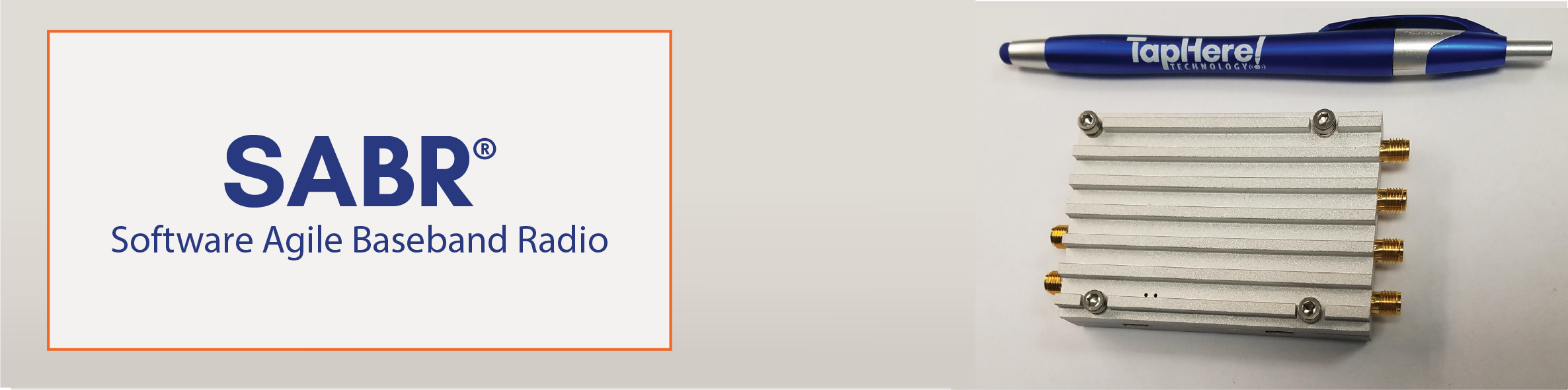
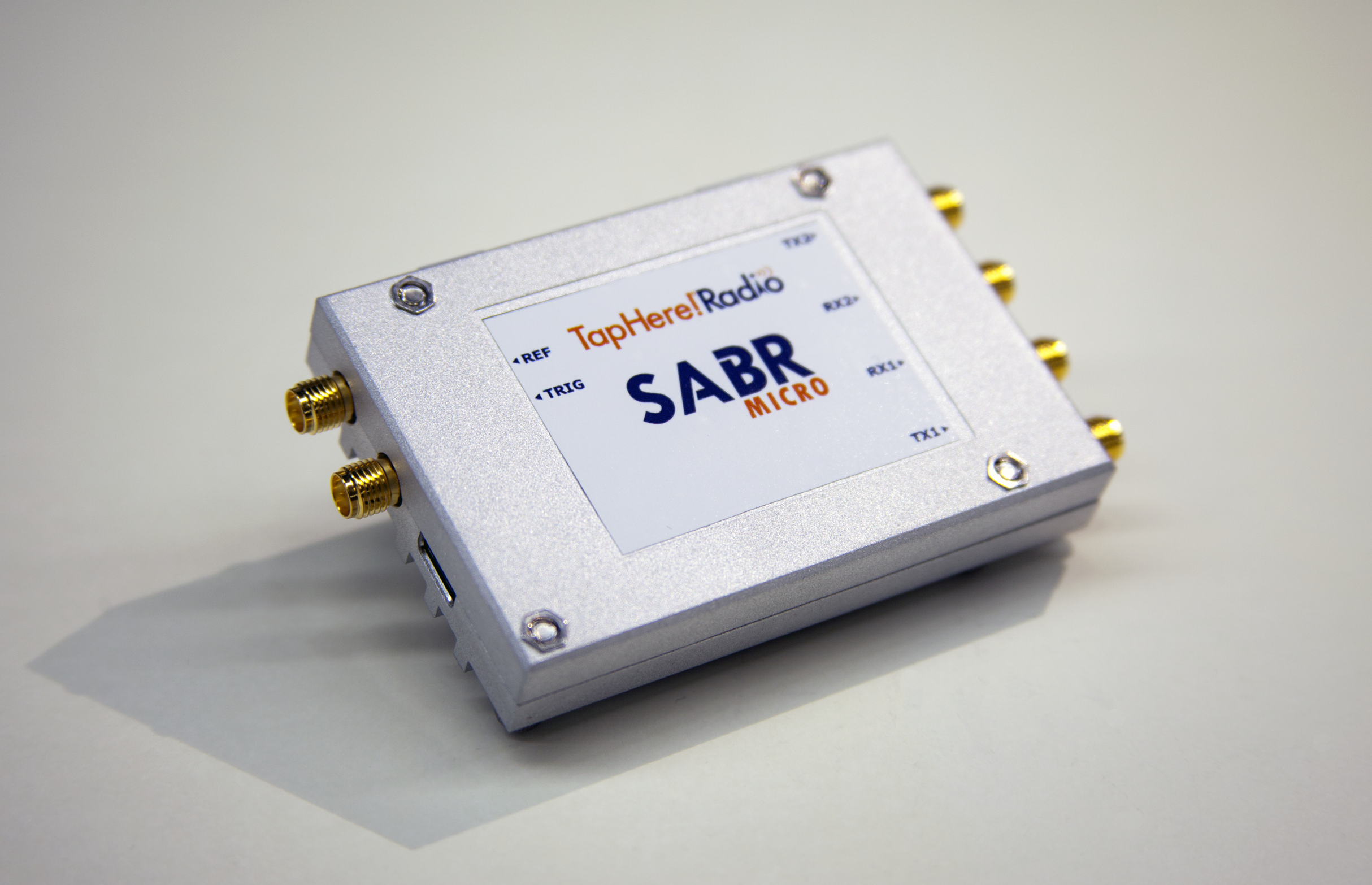
SABR® changes the traditional approach to software defined radios. Smaller than your average deck of cards, bus-powered, and built into a rugged, thermally coupled aluminum casing, SABR® won't take up much room on your lab bench can be easily integrated into existing devices. Out of the box SABR® supports some of the most popular SDR and engineering platforms, plug and play.
Simple.
SABR® supports 40 MHz to 6 GHz transmit and receive. It's bus-powered via USB-C, so no external bricks or power leads are needed. It operates at full USB 3 speeds, to support 60+ MHz of bandwidth at 12 bits. (It's USB 2 compatible at lower bandwidths, though!) No need to know obscure chipset configurations, just tune to your frequency and go. But SABR® is also up to the challenge of operating on its own: SABR® includes user-accessible space on the low power draw Artix-7 FPGA and onboard DDR RAM, so engineers can go beyond.
Adaptable.
If you're looking to roll your own SDR solution, our developer-friendly API doesn't require preconfiguration or lengthy image loads - even a minimally RF-experienced coder can be working with signals using C#, C++ or other languages like Python via our ZMQ interface, within minutes.
Extensible.
SABR®'s general I/O interface allows for integrated extensibility, to any host other programs or API implementations and a switchable filterbank to get the most from your signal in the field.
Freq Range: 40 MHz - 6 GHZ
Modes: (2)RX, (2)TX
Modulations: PSK, FSK, C4FM, QAM, MSK, GMSK, AM, FM, CPM (Extensible)
Sample Rate: 200K samples/sec - 61.44M samples/sec
RF Channel Bandwidth: 60 MHZ
Size: 2" x3" (Deck of Cards)
Weight: 2.9 oz
Firmware: USB update
TX Output: +10 dBm (+23 dBm < 2 GHz)
RX Sensitivity: -120 dBm avg
Power Consumption: 2.4W@5V (idle); 2.8W@5V (Rx); 2.8W@5V (Tx) via USB
Commercial Standards: DMR, DSTAR, P25, YSF
API: C#, C+, Python/ZMQ
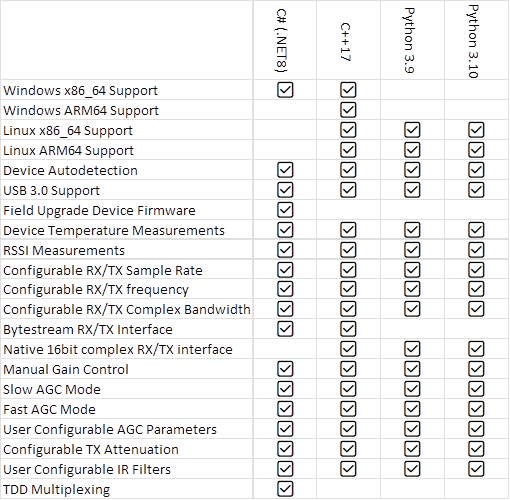
SABR® provides the capability for junior programmers to quickly set up an RF-enabled application, while maintaining the capability for powerful direct access to the hardware.
Homegrown
SABR® and related solutions are designed, built, and supported in the USA.